
South Carolina Resident Lookup Records
South Carolina has no single public index that confirms every part of a person’s life. The state layer offers court navigation, voter registration, vital-record issuance, licensing and business searches; county offices hold the parcel, deed, probate and many full case files. Choose a source by the question it can answer. A tax roll identifies an assessed owner and parcel, not everyone living there. A registration result describes an individual voter record, not a reverse address list. Each record should be read within its own limits.
| Record | What It Confirms | Where to Search | Access |
|---|---|---|---|
| Assessor and parcel | Tax owner, parcel number, situs and mailing fields | County assessor or GIS portal | Public access varies by county |
| Voter registration | Matching registration status, precinct and districts | MySCVotes | Individual check requires name, county and date of birth |
| Court docket | Party role, case number, court and reported events | Court Roster Search, then county portal | Some records, images and case types are restricted |
| Vital records | Birth, death, marriage or divorce event | DPH Vital Records, Probate or Clerk | Age and relationship rules govern copies |
| Probate file | Estate, personal representative and possible heirs | County Probate Court | Public file subject to confidential exhibits |
| Business and license | Entity, registered agent or professional status | Secretary of State or LLR | Free name searches; not proof of residence |
If the starting point is a likely county and a person’s name, an assessor and the relevant business or professional search can produce independent identity details. If the question concerns a court matter, begin with the statewide roster and follow its county link. For a life event, use the office that issues that record rather than treating an index as a certificate. A resident lookup is a sequence of narrow checks, not a single verdict about a person.
South Carolina Court Roster Fields
The Judicial Branch landing page confirms one statewide starting field: “County, City, or Zip Code.” It routes a searcher to a county or city roster; it does not expose one uniform set of case fields for every court. Most counties link to the public index, while Charleston routes to its county system. Municipal ordinance and traffic cases can remain with the municipal clerk, so a county result may not cover every local case.
Use the South Carolina Court Roster Search to select the correct jurisdiction. Open the destination and follow the live field labels there. County public-index portals commonly support a party name and may offer case number, court or case category, filing date range, status or party role, but the research did not confirm a statewide field list. A name-only hit still needs a second identifier.
See the Judicial Branch roster landing page for the confirmed county, city or ZIP routing field.
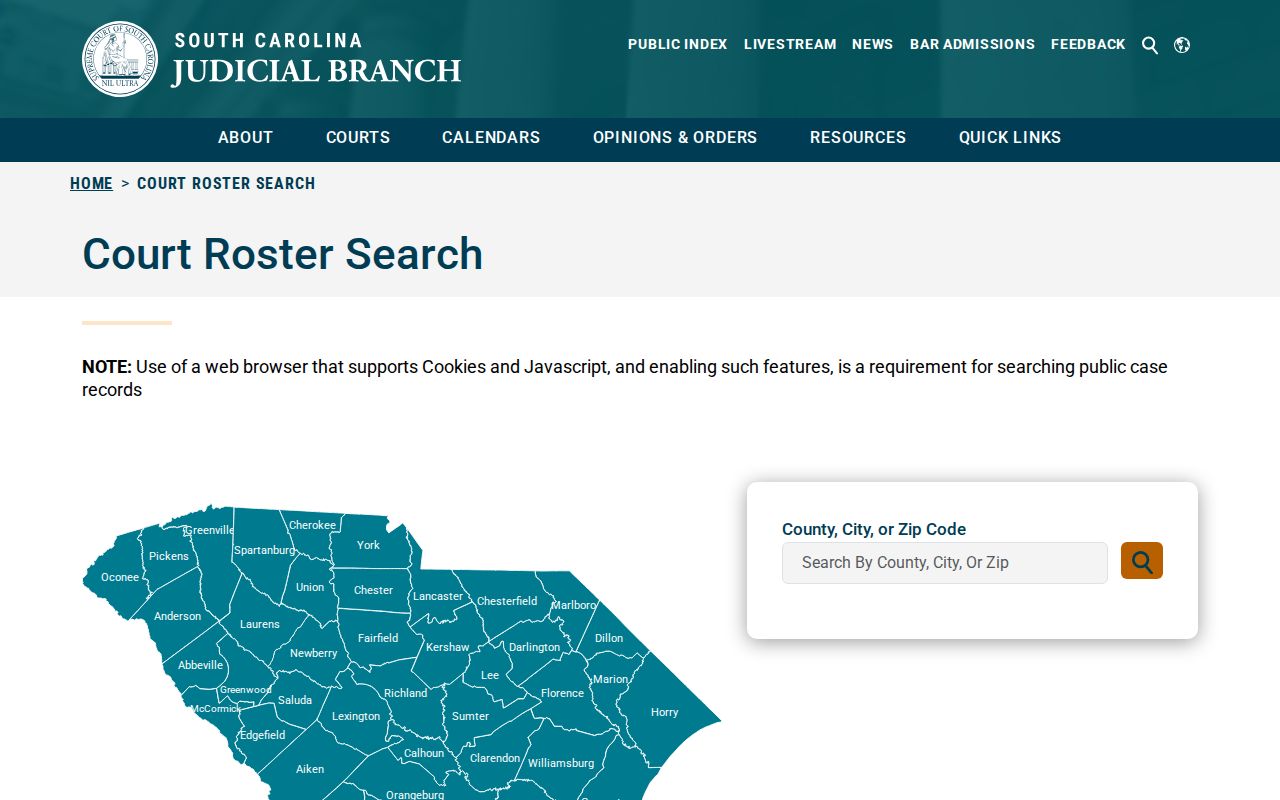
The landing page is a route to local portals, so the county-specific search labels should guide the next step.
A roster line may show a party, filing date, court division, hearing or reported disposition. The full docket or document image can require a clerk terminal or a direct request. Juvenile, sealed, expunged, adoption and protected family information may be hidden. For a public file, save the case number and ask the Clerk of Court how to inspect the complete record; a docket entry alone is not a finding about the person.
South Carolina Voter Lookup Rules
MySCVotes is an individual verification tool. The voter must enter the name, county and date of birth exactly as they appear on the voter registration card. It is not a reverse address search and does not take a ZIP code as a substitute for those three fields. The result can help confirm registration status, precinct, districts, polling place and reported participation, but it does not establish that the person currently lives at a particular address.
Read the official MySCVotes registration and lookup instructions before making the check.
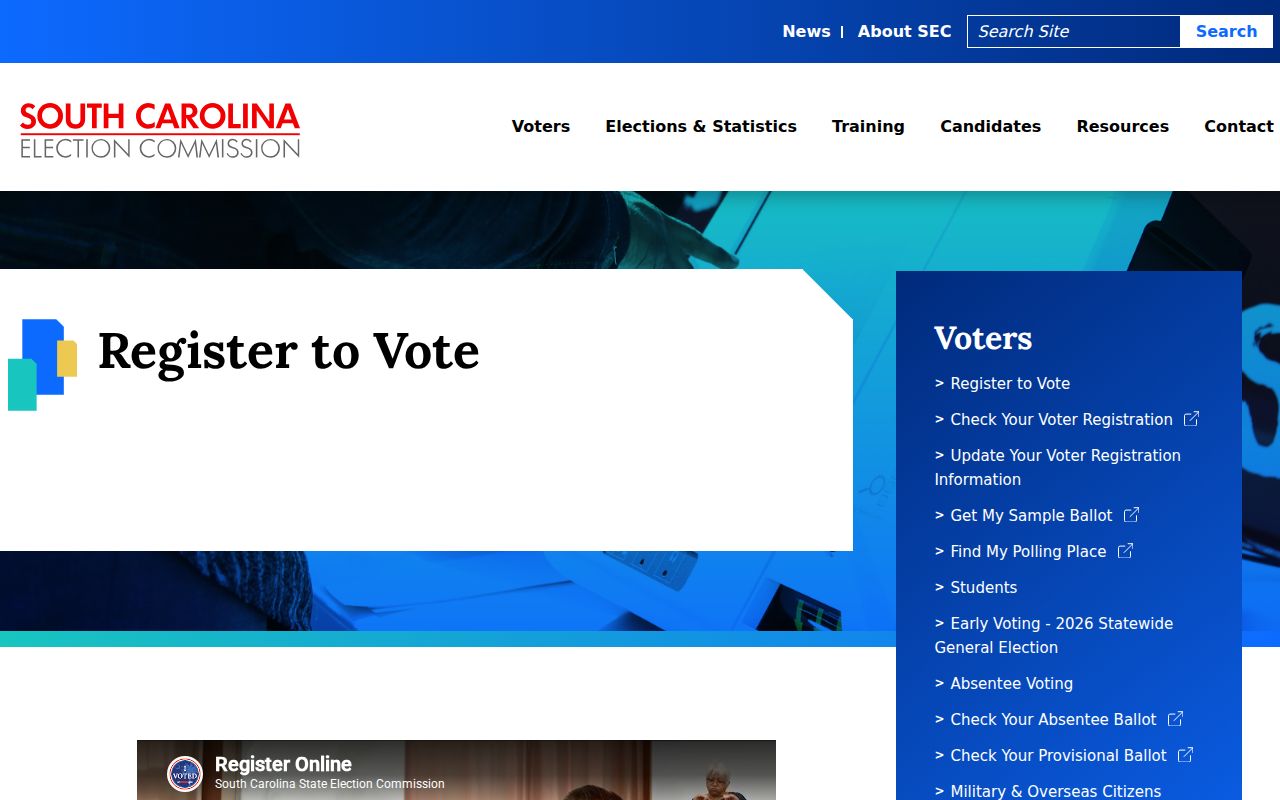
Those required fields make MySCVotes an identity check for a known voter, not a directory of residents by street or postal code.
The fuller voter file is a separate request. South Carolina limits purchase to a registered state voter under S.C. Code §7-3-20(D)(13). Available filters include county, voting district, age, sex, race, household, election participation and registration date. Electronic files can include address, registration number, precinct, districts and participation history; the list does not reveal ballot choice. The ballot is secret, and South Carolina does not register voters by party. Check the Secretary of State’s voter-list eligibility, fee and use rules before requesting a file.
Commercial solicitation directed to a person in South Carolina is restricted by §30-2-50. A voter list is not permission to harass or contact people for prohibited purposes. A voter may request inactive status; the 2025 form says that request removes the record from active lists and makes it unavailable for online lookup. An absent online result therefore does not prove that a person never registered or lived in the state.
South Carolina Vital Record Access
Vital records are issued through different offices depending on event and date. South Carolina birth records begin in 1915. A birth record becomes public after 100 years; before then, a certified copy is limited to the registrant of legal age, a parent or guardian, a legal representative and other statutory routes. Death records open to any applicant after 50 years when the person can be located; before that, relationship or direct-and-tangible-interest rules apply, and some requesters can receive only a limited fact statement.
| Event | South Carolina route | Access boundary |
|---|---|---|
| Birth | DPH Vital Records; mail, eligible online vendor or regional office | Since 1915; public after 100 years |
| Death | DPH Vital Records; historical indexes may help locate an event | Public after 50 years; earlier copies have eligibility rules |
| Marriage | County Probate Court before July 1, 1950; DPH central files from that date | Older county licenses and later central records use different custodians |
| Divorce | DPH report from July 1, 1962; county Clerk of Court for decree and case file | DPH report is not the decree |
Applications require the current form, identity documents and eligibility details. The current DPH fee page lists a $12 nonrefundable search that includes one copy when found, $3 for an added copy, and a $17 expedited fee for eligible non-mail service. DPH reports an average four-week mail process and about five to seven business days for an approved online vendor. Fees and processing estimates can change, so use the live schedule before sending payment.
Review DPH birth-certificate request channels and the current form requirements.
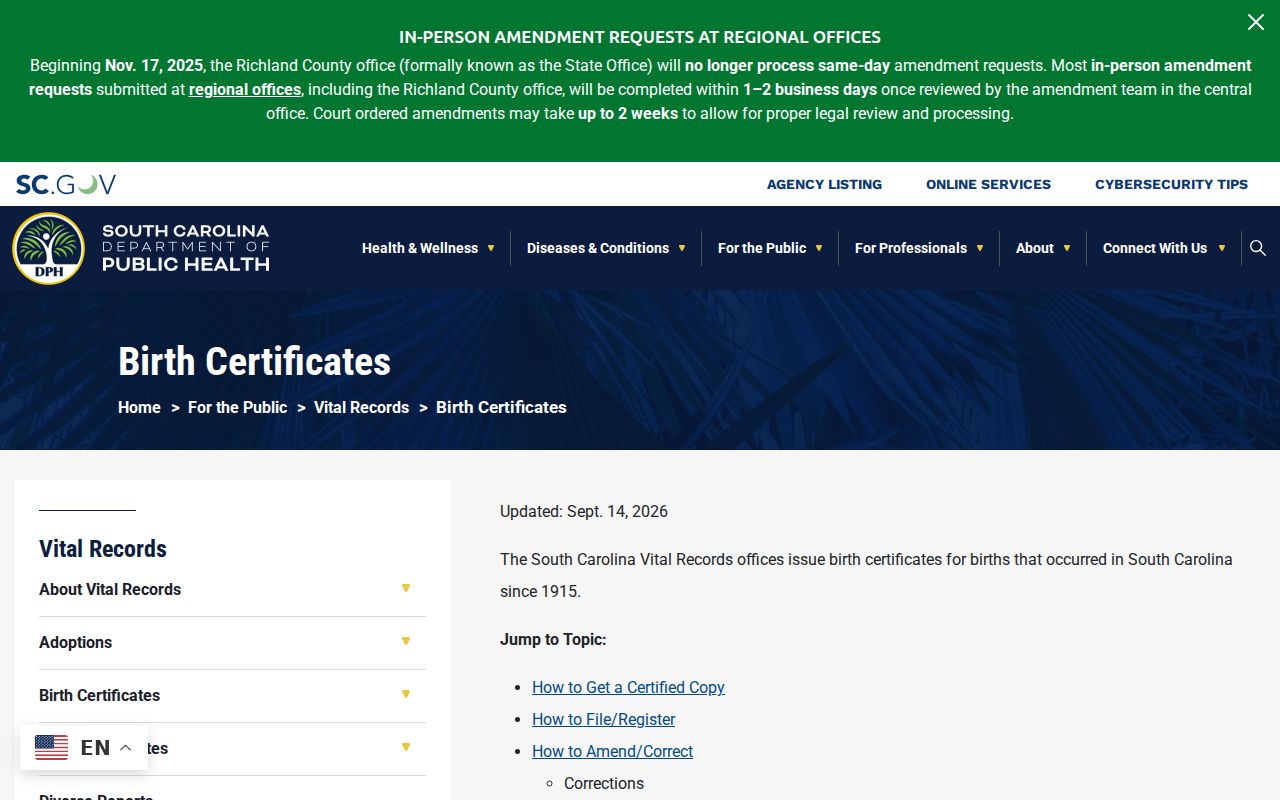
DPH routes eligible requests through mail, regional offices and approved online channels, while the underlying record rules still apply.
For a marriage license issued before central filing began, contact the county Probate Judge. For a divorce, request the decree from the Clerk of Court in the county that heard the case; the DPH report is a separate record. Newspaper or genealogy indexes can help identify a date or county, but they do not replace a certified copy.
Verifying a South Carolina Resident
A reliable match comes from details that agree across separate custodians. Start with the name as written, including a middle initial or common spelling variant. If an address is known, keep the situs address, tax mailing address and parcel or TMS number separate in your notes. An owner’s mailing address can be a post office box, relative, agent or another property, so it should not be read as a current home by itself.
- Search the county assessor by owner or address and note the parcel/TMS, situs and tax mailing fields.
- Check the deed index through the county Register of Deeds to confirm a recorded interest and legal description.
- Use a court, voter or vital-record source only when its required fields and access rules fit the question.
- Compare dates, county, case or parcel number, and a second independent identifier before treating two entries as one person.
- Request a certified copy from the record custodian only when a formal copy is needed and the requester qualifies.
A court result has its own inventory. The name is linked to a party role such as plaintiff, defendant, petitioner or respondent; placement fields can include case number, county, division and filing date. The case category, attorney, scheduled event and status may appear, while linked orders or older docket pages may require a clerk visit. Keep the court and case number with the result because names alone are weak identifiers.
- Docket
- The court’s running list of filings, events and orders in a case.
- Index vs image
- An index is a searchable entry; an image is a view of the underlying filed or recorded document.
- Certified copy
- A copy authenticated by its custodian, used when an official proof of the record is required.
South Carolina Heir Probate Trail
Probate is the strongest official starting point when a search concerns an estate or a possible heir. Search the county Probate Court by decedent name or estate number, then note the personal representative and filing or death date. A petition or will may identify family relationships, and a deed of distribution can show property passed from the estate to a recipient. Addresses in older filings may be stale, so treat them as historical record fields rather than present contact details.
From the probate file, follow the property side through the Register of Deeds. A recorded distribution deed can connect a decedent’s parcel to an heir or beneficiary; the assessor can then confirm the current tax owner and parcel fields. Obituaries can help resolve a common surname, but the probate file and deed are the records that document the legal estate path. This is one of the useful South Carolina resident lookup routes for family history and estate research.
Probate access differs by county. Some systems permit online estate searches or subscriptions, while older files may require a courthouse request. Sealed or confidential exhibits remain restricted. Ask the Probate Court how to inspect a public file and whether an older estate is held onsite or in an archive.
South Carolina Business Name Records
Business and professional records can corroborate an identity, but they rarely establish where someone lives. The Secretary of State search hub reaches entity, registered-agent, UCC, notary, charity and trademark records. An entity record may show status, registered office and agent. The agent can be a filing service or law office rather than an owner, and the Secretary of State says officer and director details are held by the Department of Revenue instead.
Open the South Carolina Secretary of State searches to choose the relevant official database.
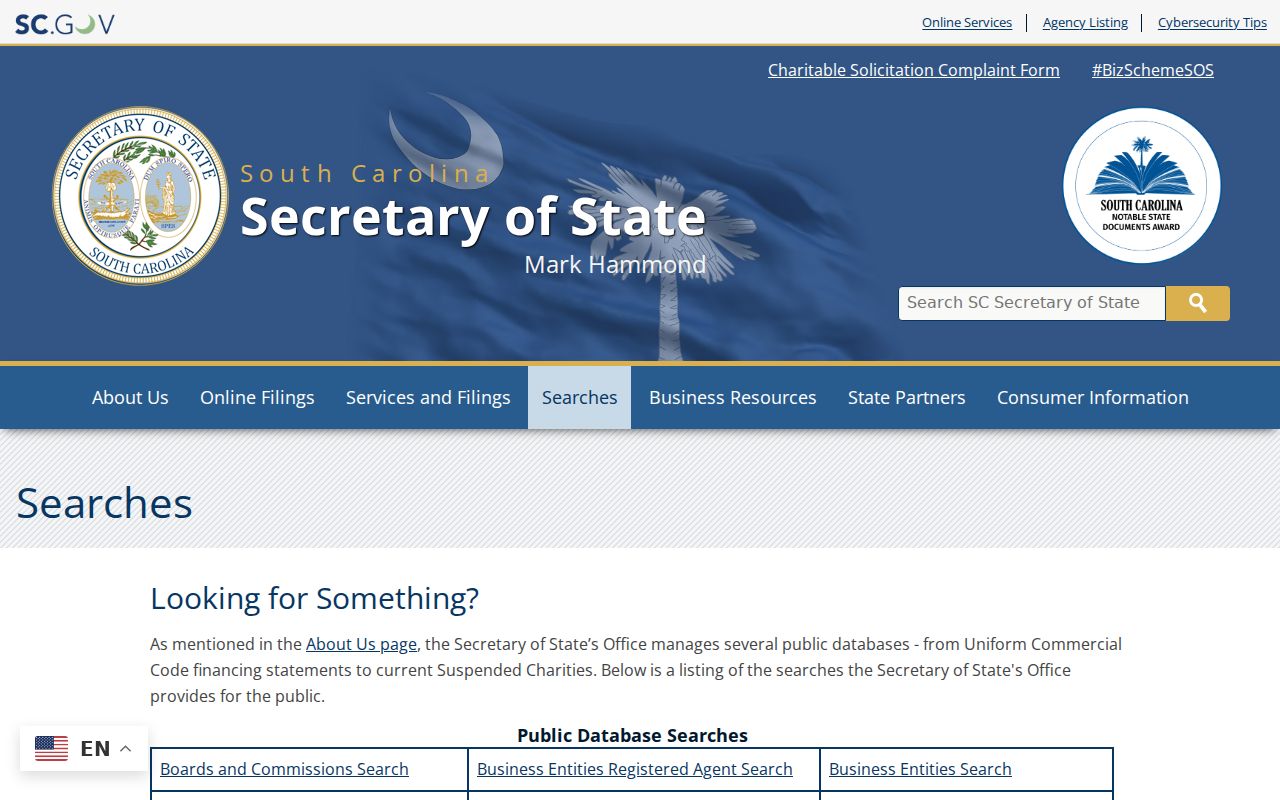
The search hub separates business entities from UCC and other record systems, so select the record type before matching a name.
UCC records connect a debtor and secured party to a filing and collateral statement; the SOS fee schedule applies to searches and copies. A county assumed-name filing may be the only route for a local trade name because there is no single statewide DBA index. South Carolina’s LLR boards let a user confirm a license type, status or public discipline order, but a license is not a residence record. Keep the board name and license number with any match.
South Carolina Inmate and Registry Scope
State custody and registry searches answer narrow questions. The Department of Corrections search covers people currently sentenced to or held in SCDC custody and is updated from the prior midnight. It excludes county detention facilities, released people, community supervision, juveniles and current fugitives. A blank result can mean the person is outside that system, not that no county jail or court record exists.
See the Department of Corrections search scope before interpreting a result.
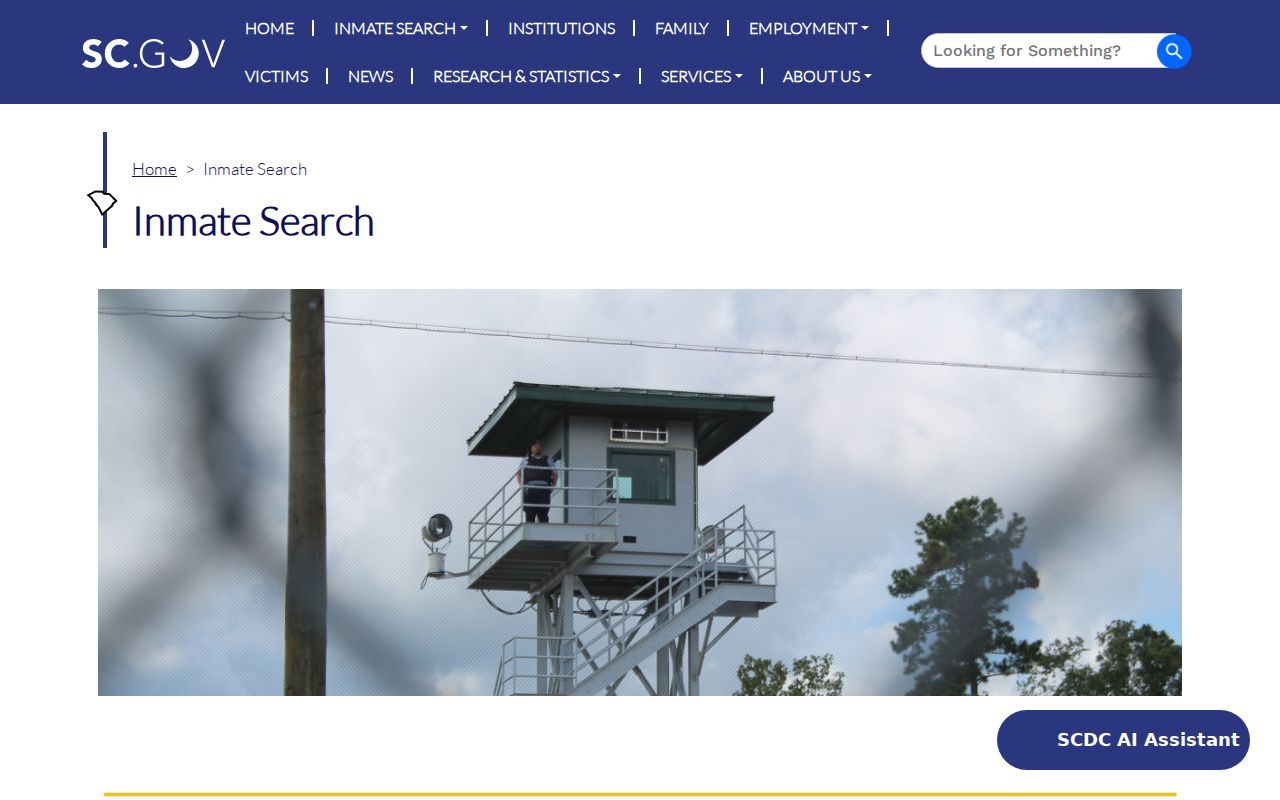
SCDC’s exclusions make the system useful for a current state-custody check, but not a complete statewide justice history.
SLED CATCH is the state’s name-based criminal-history channel. It has a $25 nonrefundable report fee plus the online convenience charge; mail requests use the current form and payment instructions. The separate SLED Offender Registry (SORT) provides its own public search, with address, map, photo and alias information where available. Follow the registry’s conditions of use and correction route, and do not mistake a name match for a verified identity.
Use the official SLED registry search and terms for its scope and use notice.
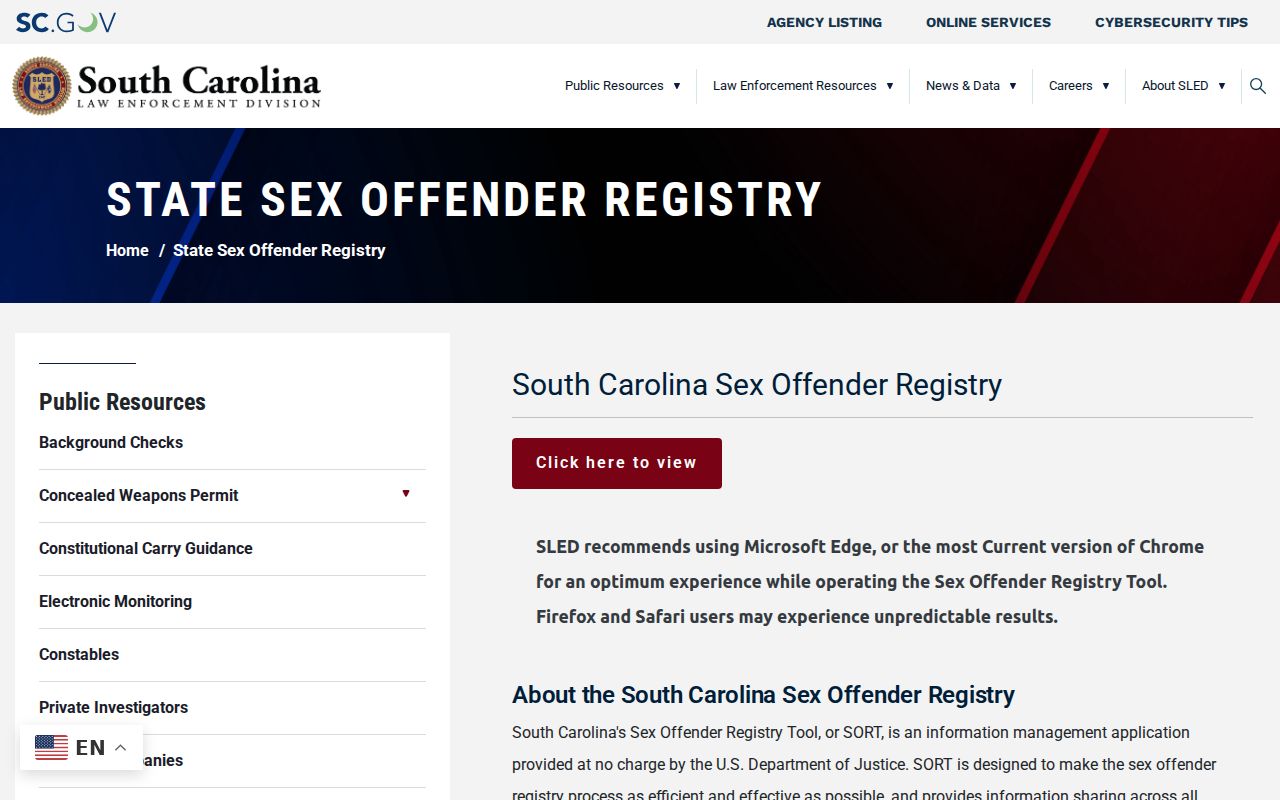
The registry’s own warning explains why search results must not be used to harass, harm or commit a crime against anyone.
South Carolina Resident Lookup Privacy
South Carolina’s Family Privacy Protection Act limits using personal information from a state agency for commercial solicitation directed to a person in the state. Voter-file eligibility and use rules apply separately. Vital records have age and relationship restrictions; sealed court records remain closed. The DMV address file is not a public directory. A public record can still contain protected or outdated fields, and no record should be copied into a new list without checking its access terms.
The Attorney General’s Address Confidentiality Program gives eligible survivors a substitute address for state and local agencies and courts. It does not erase information already in public records, and private companies are not required to accept the substitute address. If a protected person appears under that address, stop at the designated address and do not try to uncover the concealed location. For an incorrect official entry, ask the custodian about its correction or appeal process and preserve the record number and response.
A narrow public-record request is another option when a portal omits a public docket or historical file. Under South Carolina’s Freedom of Information Act, the public body generally makes an initial determination within 10 working days for a record less than 24 months old or 20 working days for an older one; production follows within 30 or 35 calendar days when disclosure is due. FOIA does not override confidentiality rules or require an agency to create a new list.
Lawful use. Keep a South Carolina resident lookup to personal, lawful research such as family history, reconnecting or confirming a public record. Using information to surveil, harass or intimidate someone can cross South Carolina’s legal limits; report threats to local law enforcement.